

Uare.AI is a human-first AI platform where people build an Individual AI from their voice, memories, knowledge, and experiences. Powered by the Human Life Model™, it evolves beyond a generic assistant into a deeply personal digital extension of the individual.
Overview
TYPE
B2C, B2B AI Product Design
ROLE
Head of Design
TOOL
Figma, Figma Make, Claude Design
Contribution
Led the 0→1 product experience, from UX and brand to scalable design systems across web and mobile app.
project snapshot
Goal
Challenge
Outcome
Goal
Make building a personal AI feel natural, not technical. Create a simple experience where users can talk to their AI, teach it about themselves, create content together, and gradually build a richer digital representation of who they are.
Generic Assistant
Individual AI
One-way AI
Collaborative AI
Hidden Memory
Managebale Memory
Static Profile
Evolving Identity
Platform-Controlled
User-Owned
COMPARE
Generic AI
Uare AI
introduction

human life model
The Human Life Model is a living model of a person across seven dimensions: Identity, World, Story, Mindset, Drive, Pattern, and Growth. Instead of reducing someone to a static profile, it helps their Individual AI continuously understand who they are, what shapes them, how they think, what motivates them, and how they evolve over time.



Previously, onboarding asked users to upload a photo and record their voice upfront. These high-effort, high-trust steps created significant drop-off, with many users skipping before experiencing the product’s core value.
I redesigned setup to use LinkedIn profile data and Gmail-based identity detection to pre-fill basic information such as name, role, and professional context. This made setup feel faster, more familiar, and better aligned with how professionals already represent themselves online.
Analytics showed that only 46% of users progressed to actions that created deeper ownership.
I redesigned the flow to deliver two moments intentionally: an early “wow, this AI understands me” moment, followed by a clear path to invest more of themselves into their AI.
Instead of ending onboarding with setup, the experience now transitions directly into conversation, personalization, and meaningful next actions.

This screen shows the Course Creation Agentic flow. The core challenge was bridging the gap between familiar, linear course formats and an adaptive AI-led learning experience. Many users initially expected a static Udemy-style course, so the preview borrows the clarity of a chat interface to make the experience feel intuitive: lessons evolve with each student, rather than following a fixed sequence.
The creation flow also needed to balance automation with meaningful human control. Users can see the AI assemble a complete course in seconds, while retaining the ability to refine any detail directly—whether that means editing a single word or uploading an image without spending tokens. The result is a workflow that feels both magical and reliably editable.
Users can always preview and test their course before publishing, giving them confidence in AI-generated content and reducing uncertainty around the final experience.


TEST COURSE

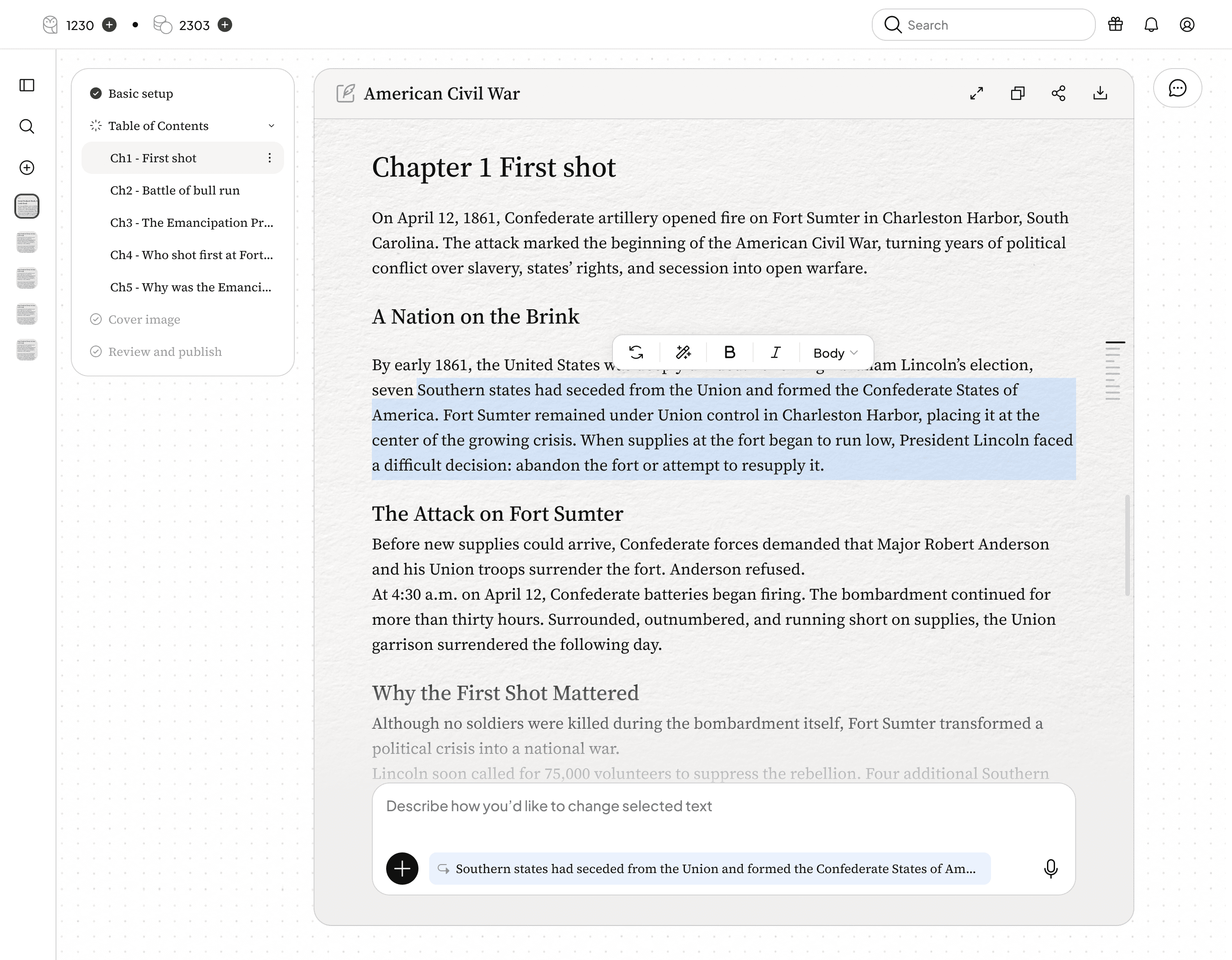
This screen shows the long-form Artifact experience, designed for content that can grow from a simple document into an entire book. The key challenge was making AI collaboration work at book-length scale, where users need to navigate, edit, and evolve large amounts of content without losing structure or context.
Instead of treating the artifact as one long AI-generated response, I designed a persistent workspace with chapters, sections, and direct AI editing. Users can rewrite, expand, reorganize, or refine specific parts while keeping the overall document intact. The system can also support multiple content formats beyond text, allowing richer, more flexible artifacts to live in the same experience.
Visually, I wanted the interface to feel closer to traditional writing and publishing than a typical productivity tool. Editorial typography, generous spacing, and subtle paper texture recreate some of the familiarity and tactility of working with a physical book, making long-form creation feel more focused, crafted, and enjoyable.


I redesigned A2A as a more direct transition from chatting with your own AI to interacting with another Individual AI.
Instead of asking users to browse recommendations and open a secondary thread, the new pattern brings the next conversation into the existing experience, reducing decision effort, simplifying mobile interaction, and creating a clearer path to conversion.
Sync level, knowledge, and tokens work together as one feedback system.
As users add knowledge and interact with their AI, their sync level increases, making the AI more capable. Token rewards make that progress feel immediate, while higher AI quality creates stronger future earning potential.



Design
Agentic. Growth-Oriented.
01
U Know
Build the AI before asking users to
depend on it.
An Individual AI only becomes useful when it understands the person behind it. I designed multiple ways for users to progressively build that context—from the Human Life Model and profile signals to uploaded files, voice, and connected social accounts.
The goal was to make “training” feel less like configuration and more like a natural part of using the product.
02
U Create
Turn personal context into better creation.
Once the AI understands more about the user, that context should meaningfully improve what it creates.
I designed creation flows that use the user's knowledge, experiences, voice, and Human Life Model as shared context, allowing the AI to create Thoughts, Courses, Services, and other outputs that feel more personal and relevant.
For complex tasks, I moved beyond a traditional chat-only experience and introduced more structured, agentic workflows.
03
U Share
Turn personal knowledge into something others can use.
Creation becomes more valuable when it can leave the private AI experience and reach other people.
I designed the publishing layer around different levels of access—from free Thoughts and public profiles to professional Courses and Services—so users could share knowledge, build an audience, and, for professional creators, monetize their expertise.
04
U Learn
Make interaction a way to gain new knowledge.
Uare AI is not only about what your own AI knows. Users can also learn by interacting with other people and their Individual AIs.
I designed experiences for chatting with other AIs, taking Courses, using Services, and exploring shared knowledge—turning social interaction into an active learning experience rather than passive content consumption.
A2A became an important part of this layer: instead of hiding conversation behind a traditional chat widget, I treated access to another person's AI as a first-class product experience.
05
U Grow
Every interaction should make the next one better.
The Individual AI is designed to evolve over time.
New conversations, uploaded knowledge, completed Courses, personal reflections, and ongoing activity can all deepen the user's model, improving sync, knowledge depth, and the quality of future AI interactions.
I designed this as an open-ended growth system rather than a one-time setup flow, reinforcing the idea that there is no “finished” version of a person.
06
U Earn
Reward contribution. Monetize expertise.
Uare AI creates value in two different ways. Users can earn tokens by contributing to the ecosystem—adding knowledge, learning, and completing meaningful actions. Professional users can also earn revenue by turning their expertise into paid Courses and Services.
I treated these as two complementary value systems: one rewards participation and growth, while the other turns personal knowledge into economic value.
07
Branding
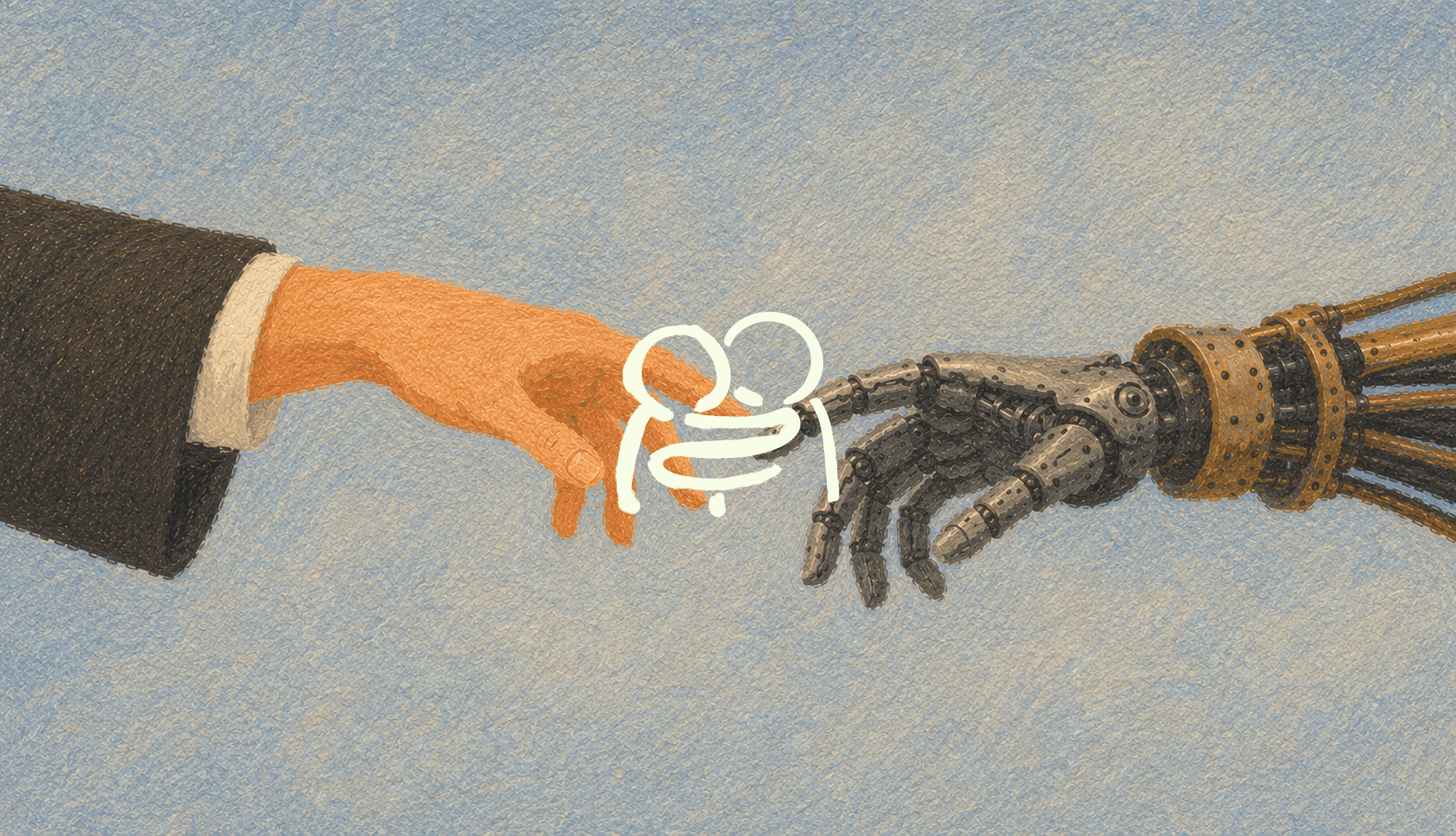
The more personal the AI becomes, the less artificial the experience should feel.
Uare is built around human identity, memory, and experience, so I intentionally avoided the cold, futuristic visual language common in AI products. Instead, I created a warmer, more organic system that feels personal, expressive, and human.
Futuristic AI → Human AI
Showcasing the brand across blog covers and Times Square campaign visuals.